10 Fascinating Facts About Budgies: The Ultimate Guide to the World’s Most Popular Pet Bird
Budgies, or budgerigars (Melopsittacus undulatus), are the most popular pet bird in the world, and for good reason! These small, colorful parakeets are packed with personality, intelligence, and charm. Whether you’re a long-time owner or considering bringing one home it is imperative that you know the facts about budgies. As, there’s always something new to learn about these fascinating creatures.
Here are 10 incredible facts about budgies that you might not know!
1. They Are Native to the Australian Outback
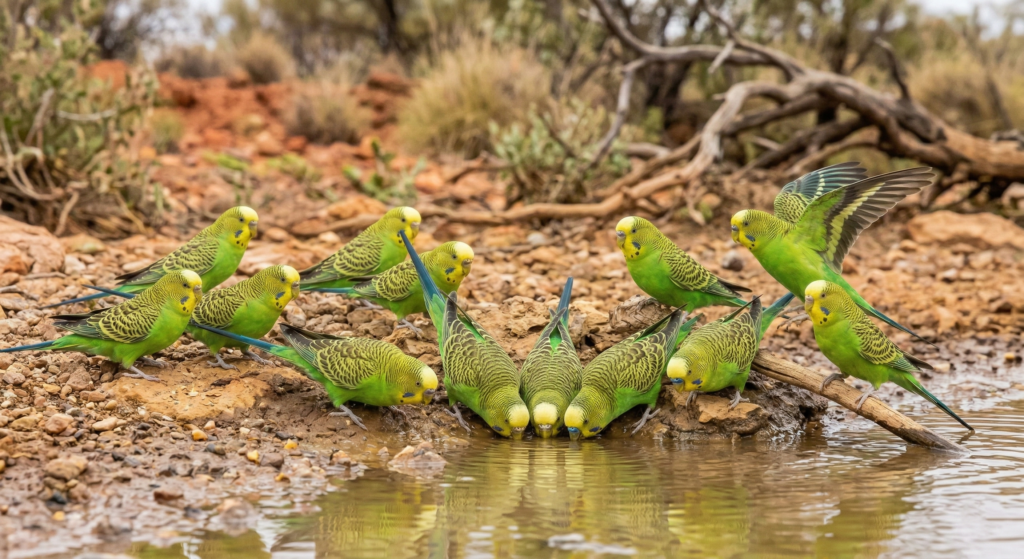
While we see them in rainbows of colors today, the original wild budgie is almost exclusively green and yellow. Native to the harsh, arid regions of mainland Australia, they are nomadic birds that travel in huge, swirling flocks in search of water and seeding grasses. Their bright green plumage offers perfect camouflage against the native scrub brush offering protection from one of the many predators within the outback.
2. ‘Budgerigar’ Means ‘Good Food’
The name “budgerigar” comes from the Australian Aboriginal language, specifically the Gamilaraay dialect. While translations vary, the most accepted meaning is derived from bujari, meaning “good,” and gar, meaning “food.” This likely referred to the fact that following the massive flocks of budgies would lead tribal hunters to the precious, seasonal water sources and ripened grain that both the birds and humans relied on.
3. Budgies Can Have Massive Vocabularies
You might be surprised to learn that budgies are among the best talkers in the parrot family, rivaling much larger birds like African Greys. They mimic human speech with incredible clarity. The world record for the largest vocabulary by a bird is held by a budgie named Puck, who knew over 1,700 words! Males budgies are mover vocal than their female counterparts. These brainy birds love to listen and repeat their favorite phrases.
4. Their Vision is Monocular and Tetrachromatic
Unlike humans, budgies can move and focus each eye independently (monocular vision). This gives them a wide field of view, excellent for spotting predators. Even more amazing, they are tetrachromats, meaning they can see ultraviolet (UV) light. This allows them to see patterns on other budgies’ feathers, identify ripe fruits, and perceive the world in colors we cannot imagine.
5. You Can Tell a Budgie’s Gender by its Nose (Cere)
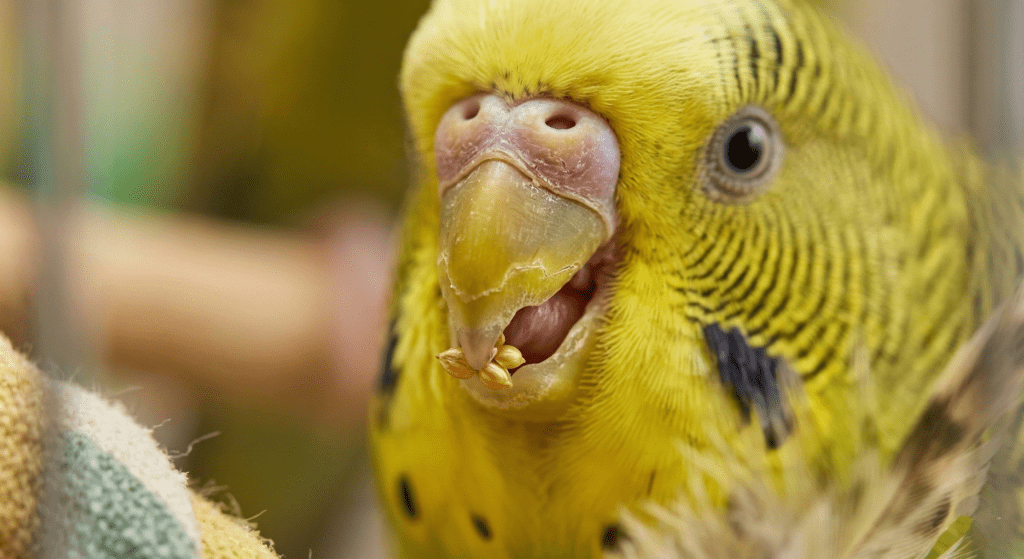
While you might need a DNA test for some parrots, telling the gender of an adult budgie is usually simple. You just look at the cere, which is the fleshy, fleshy part right above the beak where the nostrils are.
- Adult Males: Typically have a bright, waxy blue cere.
- Adult Females: Usually have a cere that is brown, tan, or whitish, and it may appear crusty when they are in breeding condition.
Note: This color rule doesn’t apply to very young budgies or certain specific color mutations (like Lutinos or Albinos).
6. A Budgie’s Heart Beats at Incredible Speeds
To power their rapid flight and high metabolism, a budgie’s heart is an engineering marvel. While a human heart beats around 70 times per minute at rest, a budgie’s heart rate can range from 200 beats per minute (bpm) when resting to over 1,000 bpm while flying!
7. They Are Social and Need Companionship
Budgies are highly social flock animals. In the wild, they are never alone. This means a single pet budgie requires a significant amount of daily interaction, toys, and mental stimulation from its human owner to be happy. If you cannot spend several hours a day interacting with a single bird, they are much happier and healthier when kept in pairs or small groups.This information is important to take in consideration when you are bringing in a budgie into your human family.
8. Budgies Ground Their Food Using Grit (But Only if Needed!)
Like all birds, budgies lack teeth. They swallow seeds whole, and the food travels to a specialized part of the stomach called the gizzard. Traditionally, it was thought that budgies always needed “cage grit” (small stones or shells) to help grind the whole seeds in the gizzard. Modern avian veterinarians, however, often advise against mineral grit for budgies that are on a proper, hulled seed or pellet diet, as it can cause impaction. Our take is that in the wild budgies are surrounded by minerals and small pebbles. Our recommendation is to provide your budgie with oyster shell. Oyster shell will not only provide grit but calcium.
9. They Can Live 10 to 15 Years (or More!)
Many people underestimate the lifespan of a budgie, often thinking they only live a few years. However, with excellent care, a balanced diet (not just seeds!), a safe environment, and regular vet check-ups, a captive budgie can easily live 10 to 15 years. With the exception of the exhibition or “show” budgie, also commonly referred to as English budgie, this variety has a shorter lifespan due to genetic mutation and inbreeding practices. Some exceptionally well-cared-for budgies have even reached 20 years of age!
10. Budgies Experience ‘Night Frights’
Budgies are prey animals, and their instinct is to sleep in safe, elevated locations within the flock. In a home environment, unexpected stimuli at night—like flashing car headlights, a sudden noise, or a moving shadow—can cause “night frights.” During a fright, a budgie will panic and flutter wildly around its cage in absolute darkness, which can lead to severe feather damage or serious injury. Many owners use a small nightlight near the cage to help prevent this.
We hope you enjoyed these 10 amazing facts about budgies! These brilliant birds continue to surprise and delight us with their complexity and charm. By understanding their history, physiology, and unique behaviors, we can provide them with the happy, healthy lives they deserve.


