Signs of a Sick Budgie: Symptoms to Watch For and When to See a Vet
Budgies are experts at hiding illness. Learn the early warning signs, which symptoms are emergencies, and what to do while you get your bird to an avian vet.
Budgies are cheerful, chatty little birds, which is exactly why it can be so alarming when one suddenly goes quiet. The hard truth is that budgies are very good at hiding illness. By the time a sick budgie looks obviously unwell, it has often been sick for days or even weeks.
The good news is that most illnesses leave small clues long before they become emergencies. This guide covers the most common signs of a sick budgie, which symptoms mean you should call a vet right away, and what you can do at home to catch problems early.
Important: This guide is not a substitute for a veterinarian. If you think your budgie is sick, contact an avian vet as soon as possible. Birds can go downhill quickly.
Why Budgies Hide Illness
In the wild, budgies live in large flocks and are prey for hawks and other predators. A bird that looks weak stands out, so budgies have evolved to act normal for as long as they possibly can. Your pet budgie still has that instinct.
That means you can’t wait for a budgie to “look sick.” Instead, the goal is to know what normal looks like for your bird, so you notice the small changes.
Know Your Budgie’s Normal: A 2-Minute Daily Check
The single best thing you can do for your budgie’s health is a quick check every day, ideally at the same time, such as when you change the food and water. Look at:
- Activity: Is your budgie moving around, playing and chattering like usual?
- Food and water: Is the food actually being eaten? Is the water level going down?
- Droppings: Do they look like they normally do, and is there the usual amount?
- Breathing: Is it quiet and easy, with the tail still while resting?
- Feathers: Are they smooth, or is your budgie fluffed up for long periods?
It also helps to weigh your budgie once a week on a small kitchen scale that measures in grams. A slow drop in weight is one of the earliest signs of illness, and it is very hard to see under the feathers. Write the numbers down so you can spot a trend.
Common Signs of a Sick Budgie
1. Fluffed-up feathers and extra sleeping
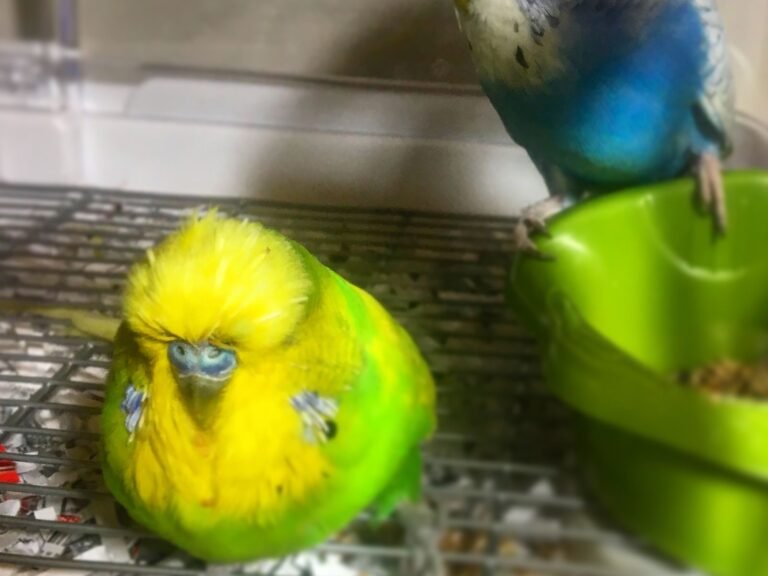
Every budgie fluffs up briefly to rest or after preening. A budgie that stays puffed up for long periods, looks sleepy with half-closed eyes, or naps much more than usual during the day may be using extra energy to stay warm. This is one of the most common signs that something is wrong.
2. Changes in breathing
Breathing problems are serious in birds. Watch for:
- Tail bobbing up and down with each breath while the bird is resting
- Breathing with the beak open
- Clicking, wheezing or squeaking sounds when breathing
- Frequent sneezing, or wet, crusty or blocked nostrils
3. Eating and drinking less (or more)
A budgie that stops eating can get into trouble fast, because small birds have a very high metabolism. Be careful: an empty seed hull looks a lot like a whole seed, so a dish can look full when your budgie has eaten everything. Blow gently across the dish or check the cage floor for fresh hulls to be sure your bird is really eating.
Drinking a lot more water than usual is also worth mentioning to your vet, especially if it comes with very watery droppings.
4. Changes in droppings
Droppings are one of the best daily health checks you have. Fewer droppings, very watery droppings, undigested seed, unusual colors or any sign of blood can all point to illness. Our budgie droppings guide walks through what’s normal and what isn’t.
5. Posture and balance problems
- Sitting low on the perch, or sitting on the cage floor
- Drooping wings or a tail held low
- Wobbling, falling, or struggling to grip the perch
- Favoring one leg, or swelling, redness or sores on the feet
6. Eyes, nostrils and beak
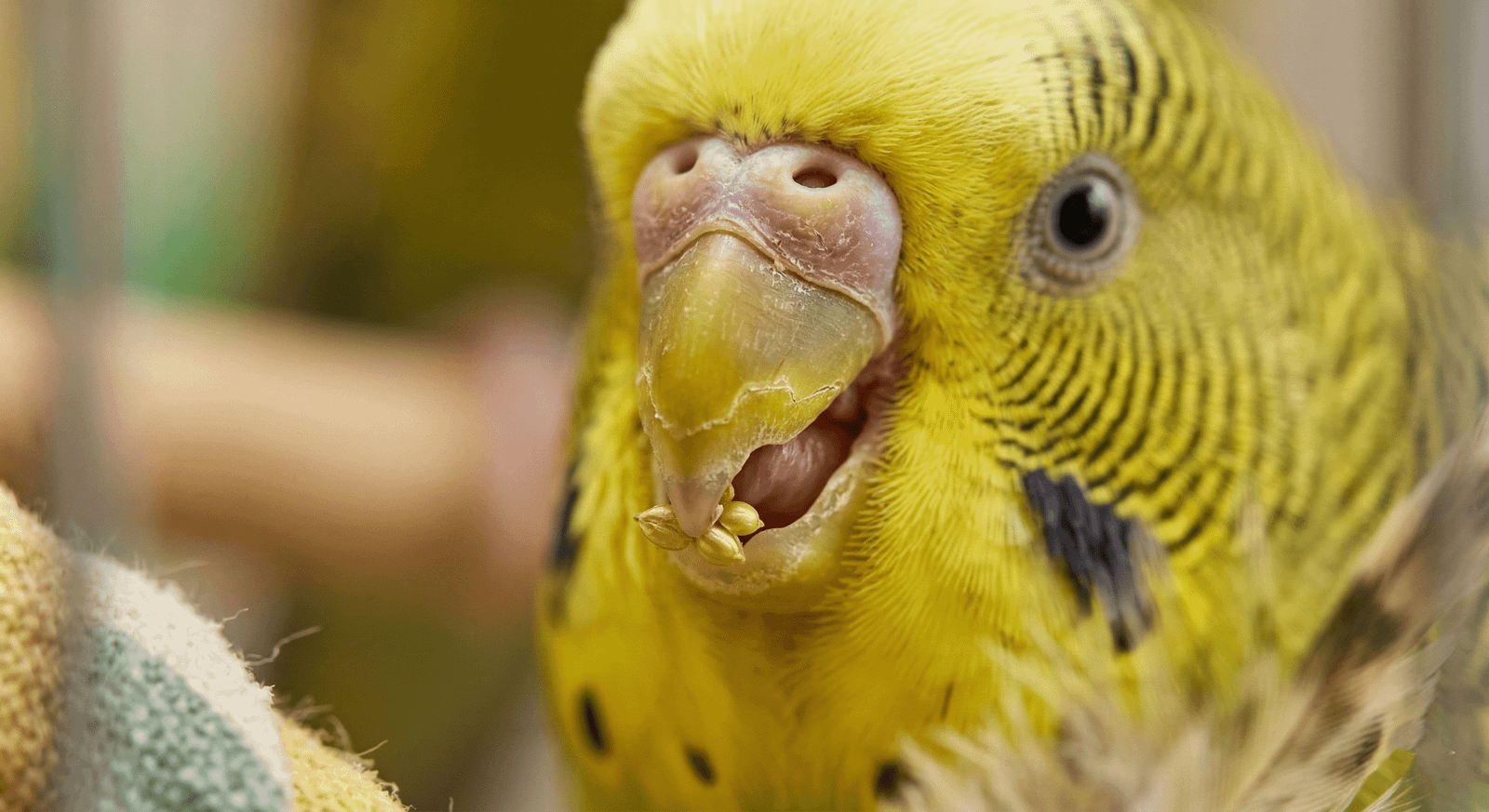
Look for watery, swollen or crusty eyes, discharge or staining around the nostrils, and any change in the beak such as overgrowth, flaking or crusty, scaly patches. Crusty patches on the beak, cere or legs can be caused by mites and need a vet’s diagnosis and treatment.
7. Vomiting or regurgitation
Healthy budgies sometimes regurgitate food to a mirror, toy or mate as part of courtship. That’s normal. What isn’t normal is a bird flicking its head and spraying food, sticky or matted feathers on the head and face, or clumps of wet seed in the cage.
8. Lumps, swelling and weight changes
Budgies are prone to lumps such as fatty tumors. Any new lump, a swollen belly, or a keel (breastbone) that feels sharper than usual because of weight loss should be checked by a vet.
9. Changes in personality
You know your bird best. A chatty budgie that goes quiet, a friendly bird that suddenly becomes irritable, or a bold bird that turns withdrawn is telling you something.
When Is It an Emergency?
Call an avian vet or emergency animal hospital right away if your budgie shows any of these signs:
- Sitting fluffed up on the bottom of the cage
- Open-mouth breathing or strong tail bobbing at rest
- Bleeding that doesn’t stop, or blood in the droppings
- Not eating or drinking
- Seizures, falling, or being unable to perch
- A swollen belly with straining in a female (possible egg binding)
- Any injury, especially an attack by a cat or dog
What to Do While You Get Your Budgie to the Vet
- Call ahead. Describe the symptoms so the clinic can tell you how urgent it is.
- Keep your budgie warm and quiet. Sick birds struggle to hold their body temperature. A warm room, a partly covered cage and a calm environment help.
- Make food and water easy to reach. Lower a perch and place food and water near it.
- Bring a recent dropping sample. Take a photo of the cage paper or bring a fresh dropping sealed in a small bag.
- Don’t try home remedies or human medicines. They can delay real treatment and some are toxic to birds.
How to Keep Your Budgie Healthy
- Feed a varied diet of quality pellets or seed plus fresh vegetables. See our budgie diet guide and fruits and vegetables guide.
- Keep the cage, perches and dishes clean, and change the cage paper daily so you can see the droppings.
- Quarantine any new bird in a separate room before introducing it to your flock.
- Keep birds away from fumes, including nonstick (PTFE) cookware overheated on the stove, aerosol sprays and scented candles.
- Schedule a yearly checkup with an avian vet, even when your budgie seems healthy.
How to Find an Avian Vet
Not every vet treats birds. Look for an avian or exotic-animal veterinarian before you need one, and save their number. The Association of Avian Veterinarians website has a Find a Vet directory that can help you locate one near you.
Final Thoughts
You don’t need to be a vet to protect your budgie. You just need to know your bird’s normal, check it every day, and act quickly when something changes. When in doubt, call your avian vet. It’s always better to be told your budgie is fine than to wait too long.
2 Comments
Comments are closed.