Budgie Poop Guide: What Normal and Abnormal Droppings Look Like
Your budgie’s droppings are one of the best daily health checks you have. Learn what normal budgie poop looks like, what changes can mean, and when to call a vet.
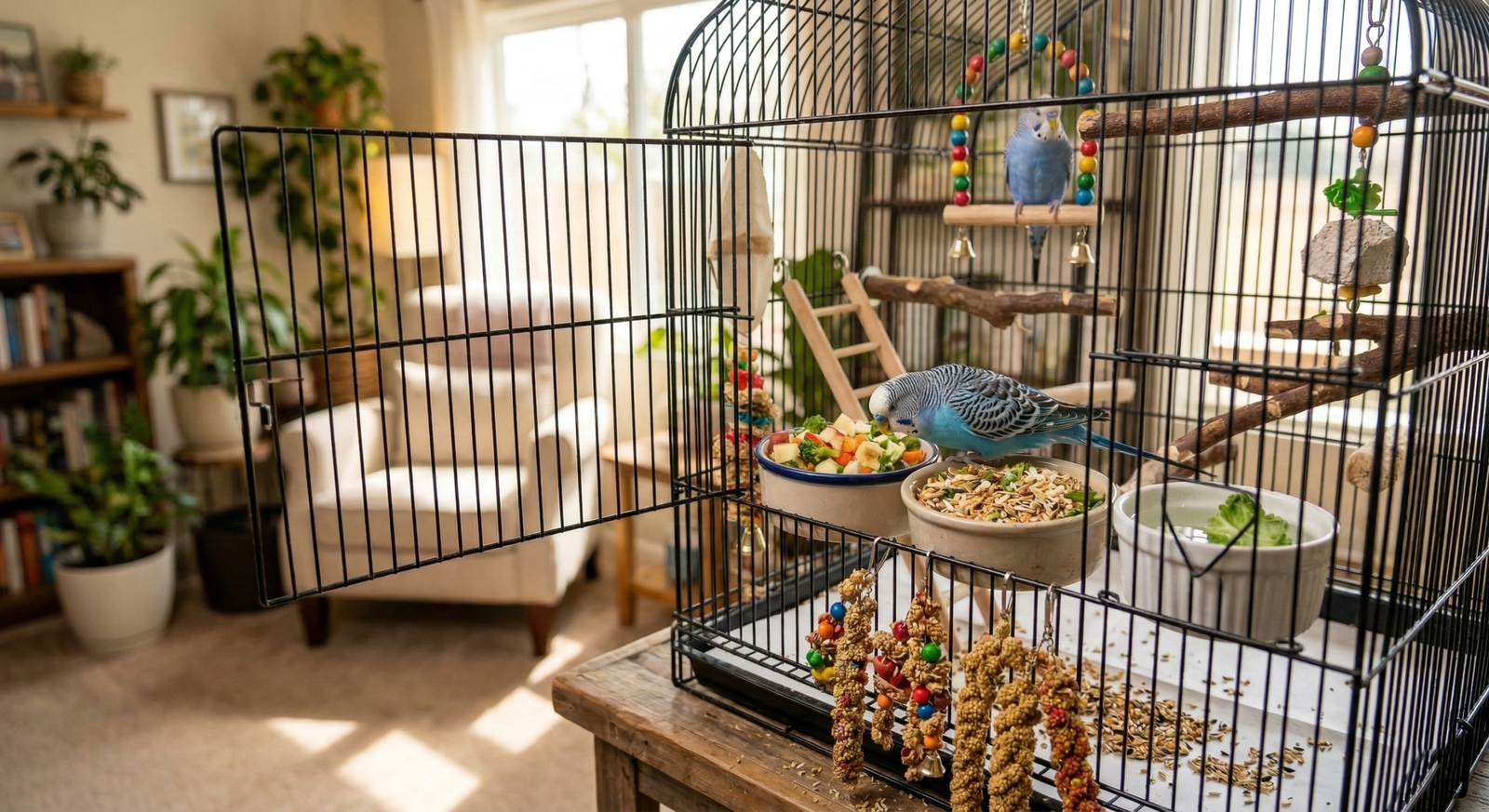
It’s not the most glamorous part of keeping budgies, but checking your bird’s droppings is one of the easiest and most useful things you can do for its health. Changes in budgie poop are often one of the first signs that something is wrong, sometimes before your bird shows any other symptoms.
This guide explains what healthy budgie poop looks like, which changes are harmless, and which ones mean it’s time to call an avian vet.
Important: This guide is for general information only and is not a diagnosis. If your budgie’s droppings look abnormal for more than a day, or you see blood, contact an avian vet.
The Three Parts of a Normal Budgie Dropping
Birds don’t pee and poop separately like mammals. Everything comes out together through one opening called the vent, so every dropping has three parts:
- Feces (the poop): The solid part, usually green to dark green in budgies. It should be formed, not mushy. Its color can change with what your bird eats.
- Urates: The white, chalky part. This is a solid form of urine waste that birds produce to save water.
- Urine: A small amount of clear liquid around the dropping.
A healthy budgie dropping is a small coil or blob of green feces with a white cap of urates and a little clear liquid around it.
How Many Times a Day Do Budgies Poop?
A lot. Healthy budgies typically produce 30 to 40 or more droppings a day, because food moves through their small bodies quickly. A sudden drop in the number of droppings can mean your budgie isn’t eating enough.
To monitor droppings easily, line the bottom of the cage with plain paper, such as paper towels or newspaper, and change it every day. Grit or corncob bedding hides droppings and makes changes hard to spot.
Normal Changes That Aren’t Usually a Worry
- Food colors: Blueberries can turn droppings blue or purple for a short time, and colored pellets can make the feces red or orange.
- Watery foods: Lots of fruit and vegetables with high water content, such as cucumber, watermelon or grapes, can temporarily increase the clear urine part.
- Stress: A trip to the vet, a new cage or a scare can cause temporarily watery droppings.
- The morning dropping: Many budgies hold it overnight and pass one larger dropping first thing in the morning.
- Hens: Females that are hormonal or about to lay eggs often produce noticeably large droppings.
These changes should return to normal within a day once the cause passes.
Abnormal Budgie Poop: What Changes Can Mean
The table below lists common changes and what they can be associated with. Only a vet can tell you the actual cause, often with tests.
| What you see | What it can be associated with | What to do |
|---|---|---|
| Lots of clear liquid with normal feces | Extra drinking or watery foods, or sometimes kidney problems or toxins | Remove watery foods for a day. Call a vet if it continues. |
| Loose, mushy or unformed feces (true diarrhea) | Digestive upset or infection | Call a vet if it lasts more than 24 hours. |
| Yellow or lime-green urates | Possible liver problems or infections | Call a vet. |
| Red or black droppings, or visible blood | Bleeding, or poisoning such as lead toxicity | Call a vet right away. |
| Whole, undigested seeds | Digestive problems | Call a vet. |
| Bulky, pale, off-white droppings | Possible digestive or pancreatic problems | Call a vet. |
| Fewer, smaller, very dark droppings | Your budgie may not be eating | Check the food dish and call a vet. |
| Droppings stuck to the feathers around the vent | Diarrhea, infection or a swollen abdomen | Call a vet. |
When to Call the Vet
Contact an avian vet if:
- Abnormal droppings last more than 24 hours
- You see any blood, or red or black droppings
- The droppings change and your budgie is fluffed up, sleepy, eating less or acting differently
If your budgie seems unwell in other ways too, read our guide to the signs of a sick budgie to know which symptoms are emergencies.
Tips for Your Vet Visit
- Take a clear photo of a few typical droppings on white paper.
- Bring a fresh dropping in a small sealed bag, or bring the cage paper from that morning.
- Write down what your budgie has eaten in the last two days, including treats and fruit.
- Note when the change started and any other symptoms.
Final Thoughts
Get to know what your budgie’s droppings normally look like, and glance at the cage paper every day. It takes a few seconds, and it’s one of the best early warning systems you have. A healthy diet helps too, so check out our budgie diet and nutrition guide.