Budgie Molting: What’s Normal, How to Help, and When to Worry
Feathers all over the cage floor? Learn how often budgies molt, what pin feathers are, how to support your bird through a molt, and the signs that aren’t normal.
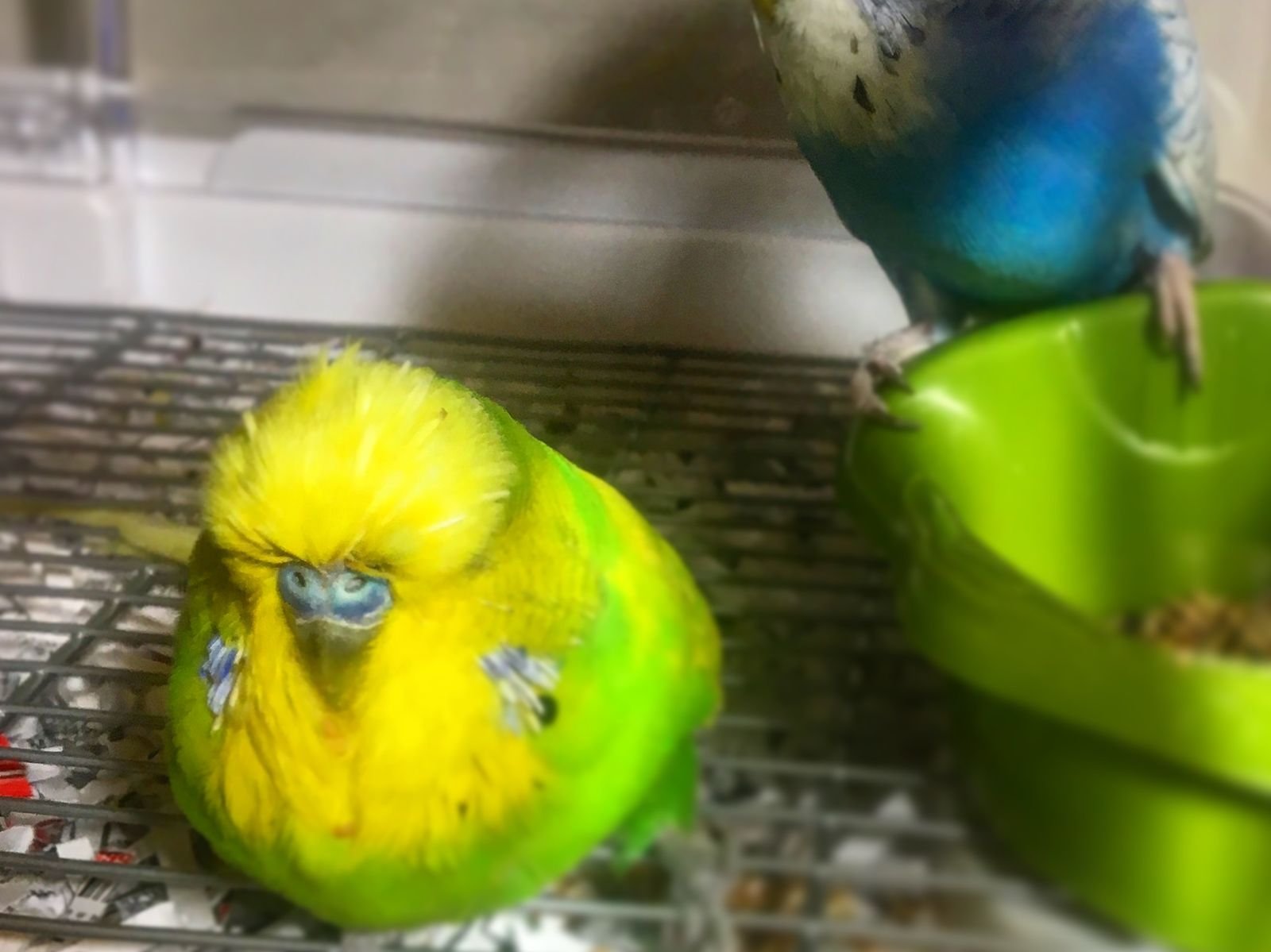
If you’ve woken up to a cage floor covered in feathers, don’t panic. Your budgie is almost certainly molting, a completely normal process where old, worn feathers fall out and new ones grow in their place.
Molting can make your budgie look scruffy and act a little grumpy for a while. This guide explains what budgie molting looks like, how you can help, and how to tell a normal molt from a feather problem that needs a vet.
What Is Molting?
Feathers wear out over time. They fade, fray and break. Molting is how birds replace them. Old feathers are pushed out as new ones grow underneath, a few at a time, so your budgie never goes bald and can usually still fly.
How Often Do Budgies Molt?
Budgies molt at least once a year, and many pet budgies go through several lighter molts a year. These lighter “soft molts” replace many of the small body feathers but not all of the long tail and wing feathers. Molts are often linked to the seasons and daylight, but indoor budgies kept at a steady temperature can molt at almost any time of year.
A molt can be quick, around two to three weeks, or it can stretch over a couple of months, depending on the bird and how heavy the molt is.
Your budgie’s first molt
Young budgies go through their first molt at around three to four months of age. This is when they trade their baby feathers for adult plumage. In many color varieties, you’ll notice the wavy bars on the forehead start to disappear after this first molt, which is one of the clues used to tell a young budgie from an adult. Learn more in our guide on how to tell a budgie’s age and sex.
Signs Your Budgie Is Molting
- Feathers and fluffy down on the cage floor and around the cage
- Pin feathers: small, spiky stubs, especially on the head and neck
- Lots of preening and scratching
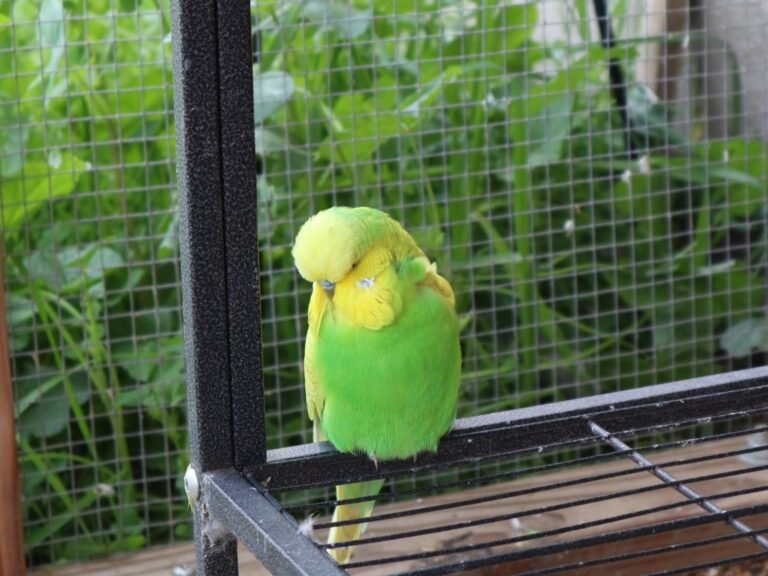
- A scruffy, patchy look
- Sleeping more and being quieter than usual
- Being a little grumpy or nippy when handled
- Flying less if wing or tail feathers have fallen out
Pin Feathers and Blood Feathers
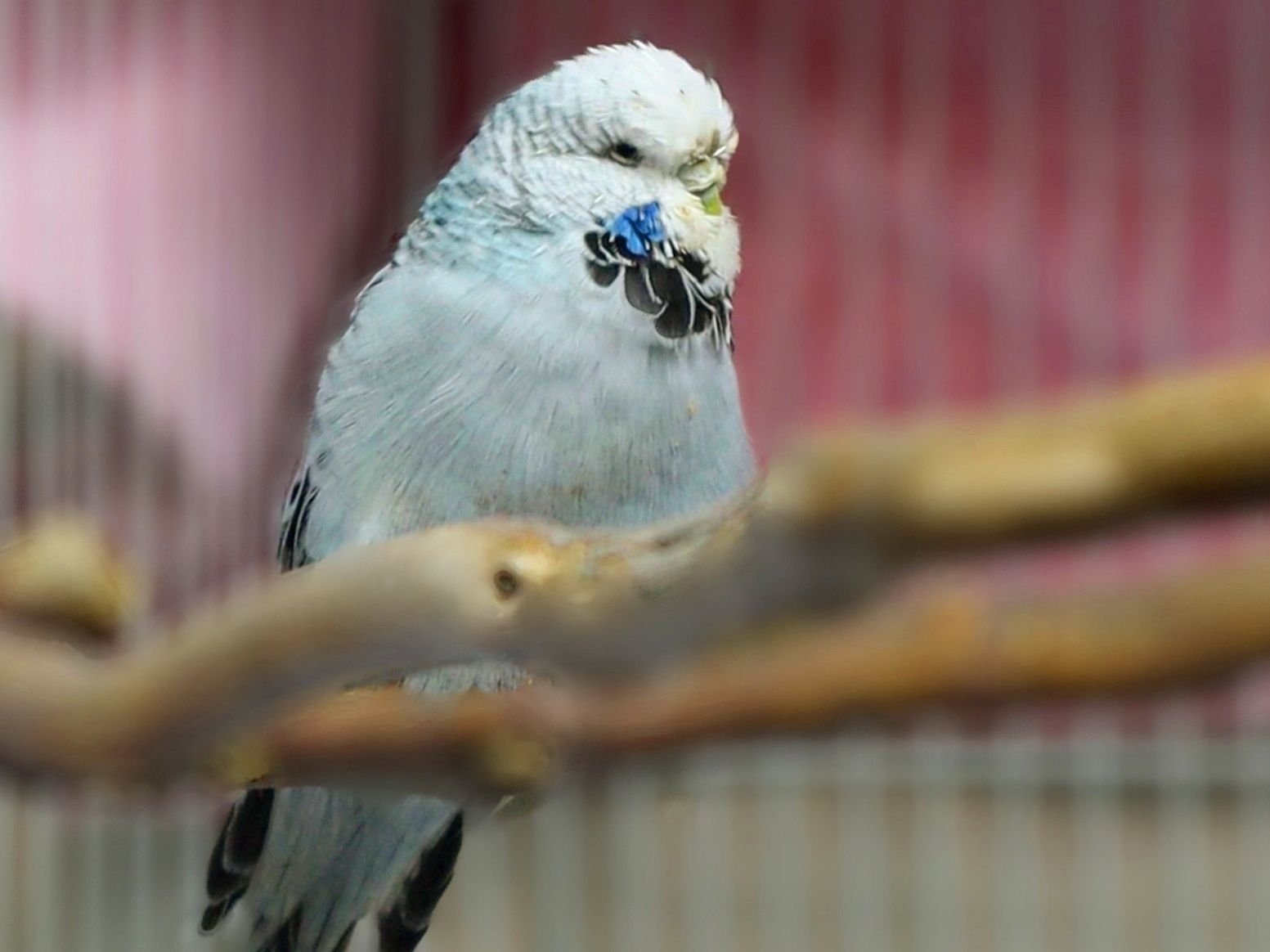
New feathers grow in wrapped in a waxy protective sheath. These are called pin feathers, and they give your budgie a spiky look. As the feather matures, the sheath dries and flakes off, and your budgie helps by preening.
Growing feathers have a blood supply, so a new feather that breaks can bleed. These are called blood feathers. Pin feathers can also be itchy or tender, so be gentle when handling your budgie during a molt.
If a blood feather breaks and bleeds: stay calm, keep your budgie still and apply gentle pressure. A small amount of styptic powder or cornstarch can help stop bleeding from a feather. If the bleeding doesn’t stop within a few minutes, or keeps starting again, call your avian vet. Sometimes the broken feather needs to be removed by a vet to stop it bleeding.
How to Help Your Budgie Through a Molt
Boost nutrition
Feathers are made mostly of protein, so growing a new set takes a lot of energy and nutrients. Keep the food dish full and offer a variety of healthy extras, such as fresh vegetables, a little hard-boiled egg, and a cuttlebone or mineral block. Our fruits and vegetables guide lists safe options.
Offer baths
Bathing or a gentle misting with lukewarm water helps soften the sheaths on pin feathers and makes preening easier. Offer a shallow bath dish a few times a week and let your budgie decide whether to use it.
Help with head scratches
Your budgie can’t reach the pin feathers on its own head. If your bird is tame and enjoys it, very gentle scratches can help break up the dry sheaths. Stop if your budgie pulls away, since growing feathers can be sensitive.
Keep things calm and warm
Molting takes energy, so keep the cage away from drafts, stick to a regular routine and make sure your budgie gets plenty of sleep. This is also not the time to start breeding.
Normal Molt vs. Something Wrong
| Normal molting | Signs that need a vet |
|---|---|
| Feathers fall out evenly on both sides of the body | Bald patches or bare skin |
| New pin feathers grow in quickly | Feathers that don’t grow back, or a molt that seems stuck |
| Your budgie still eats, drinks and plays | Your budgie is fluffed up, sleepy and not eating |
| Feathers look normal once they open | Deformed, twisted, broken or discolored new feathers |
| Preening is normal grooming | Plucking or chewing feathers, or bleeding |
What Is French Molt?
Despite the name, French molt is not a normal molt. It is a feather disease seen mostly in young budgies and is linked to viral infection, most notably avian polyomavirus. Affected budgies often grow deformed feathers or lose their tail and wing feathers, and some are never able to fly. These birds are sometimes called “runners” or “hoppers.”
There is no cure, but many affected budgies can live comfortably as pets with good care. Because the virus spreads through feathers, droppings and dust, a budgie with suspected French molt should be kept apart from other birds and checked by an avian vet, who can test for the cause.
When to See a Vet
- Bald patches or areas of bare skin
- A molt that seems to go on and on, or new feathers that never grow in
- Deformed or broken new feathers
- Feather plucking or chewing
- A blood feather that keeps bleeding
- Molting along with other signs of illness, such as fluffing up, sleeping a lot or not eating
If your budgie seems unwell, read our guide to the signs of a sick budgie.
Final Thoughts
A molting budgie might look scruffy and act grumpy, but molting is a healthy, natural process. Give your bird extra nutrition, a bath, some peace and quiet and, if it likes them, a few gentle head scratches. Before long, your budgie will be showing off a bright new set of feathers.